Holiday Travel Weather: How a Pilot Reads the Forecast
Most people check the weather at home the morning they fly. Pilots start days earlier, and we look at the whole route. That's how I read holiday travel weather too. The storm that strands you usually isn't over your house. It's over the airport where you change planes.
So start checking three to seven days before you fly, and check your connecting airport along with the airports you leave from and land at. Read the National Weather Service watches and warnings instead of trusting the little snowflake icon on your phone. If a storm looks likely at your connection, look at an earlier flight while there are still seats.
Thanksgiving flight delays 2026: what the FAA says
Thanksgiving week is the first big test of the holiday season, and this year the FAA expected a heavy one. On November 24, 2026, the FAA said it was "projecting the busiest holiday skies in 16 years," with "more than 417,000 flights" forecast over its nine-day holiday period. TSA said it expected to screen about 17.6 million travelers from November 24 to November 30, with more than 3 million on Sunday, November 29.
Weather isn't the only thing that slows the system down. Staffing does it too. On Monday, November 23, the FAA briefly paused flights into Chicago O'Hare. CBS News Chicago reported that the FAA "said low staffing led to a brief pause of incoming flights to O'Hare Monday morning." That came ten days after the nationwide ground stop on Friday, November 13.
There's also a new rule in the tower. An FAA notice issued in October "mandates that a stand-alone watch supervision position be staffed" whenever controllers use Line Up and Wait. That's the procedure where the tower clears an airplane onto the runway to sit and wait for its takeoff clearance. The Washington Post reported that the FAA "rolled out" the change on Tuesday, November 24.
Here's what that looks like from the cockpit. When an airport can't take every airplane headed its way, the FAA slows the flow, and that's what people mean by FAA delays. In a ground stop, flights headed to that airport are held at their departure airports until the stop ends. In a ground delay program, they wait on the ground for an assigned departure time. The cause can be weather, staffing or plain volume. So yes, you can sit at the gate under a perfectly blue sky.
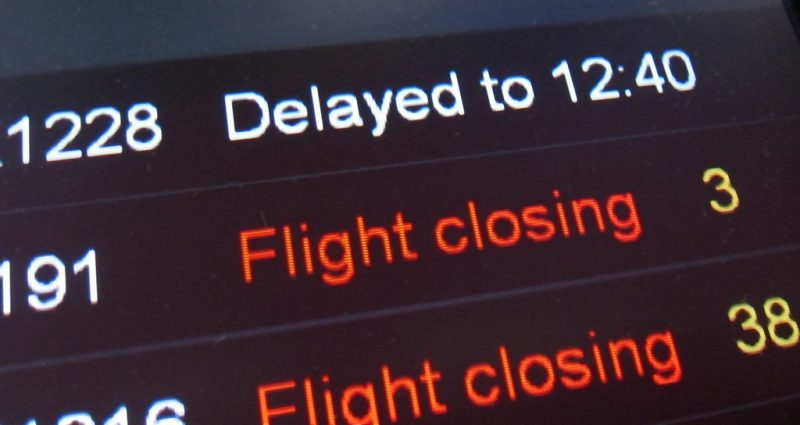
The FAA's own advice this week was simple. "Allow extra time to get to the airport, check with your airline for flight updates and visit nasstatus.faa.gov for real-time airport conditions." The National Airspace System status dashboard shows which airports have delays right now and why.
The same habits will carry you through Christmas and New Year's, so let's get into the forecast.
Why your connecting airport matters most
A holiday delay can start at another airport. Your flight can be late on a sunny day because the airplane or the crew is coming from a city under snow.
I put it this way in Mastering the Art of Travel: "During the wintertime, a lot of airports in the North cancel or have delays because of snow. If your flight is a continuation flight from one of these places, it could be delayed by up to six hours or more."
So before a holiday trip, write down every airport on your ticket. Where you leave from, where you connect and where you land. Those are the ones you watch.
When to start watching the forecast for Christmas travel
A forecast a week out is a hint. A forecast a day out is something you can plan around. Here's how I use each one.
- Six to fourteen days out. The Climate Prediction Center publishes 6 to 10 day and 8 to 14 day outlooks. They show whether a region leans colder, warmer, wetter or drier than normal. They won't pick out one storm, but they'll tell you which part of the country deserves a second look.
- Three to seven days out. The Weather Prediction Center posts a Day 3 to 7 U.S. Hazards Outlook. It's a national map, and it's a good place to spot a big winter storm days before it shows up.
- One to three days out. Go to weather.gov and put in each city on your ticket. That's your local National Weather Service forecast, and it's where the watches and warnings get posted.
The book has a whole step on this, the four-day weather forecast. As I wrote there, "Doing this small task before you depart on a trip will help you determine how and what to pack." It also gives you a good feel for whether your trip will run on time. "It’s worth the look and helps manage expectations."
Read the forecast the way a pilot does
Know the difference between a watch, a warning and an advisory
The National Weather Service picks these words carefully, and its winter weather page lays them out.
- Watch. Be prepared. A winter storm watch means conditions are favorable for a significant winter storm.
- Warning. Take action. A winter storm warning is for a significant event with snow, ice, sleet or blowing snow. The Weather Service says travel "will become difficult or impossible in some situations."
- Advisory. Be aware. A winter weather advisory means wintry weather is expected, but not bad enough to meet warning criteria.
The same page notes that each local office sets its own criteria. The amount of snow that triggers a warning in the Northern Plains is typically much higher than the amount needed in the Southeast. A southern airport can have a rough day with a lot less snow than a northern one.
A watch at your connecting airport two or three days out is the time to start looking at options.
Read the forecaster's own words
Every local Weather Service office writes an Area Forecast Discussion. The National Weather Service glossary describes it as the forecaster's reasoning behind the forecast, focused on the biggest challenges. You'll find it on your local forecast page at weather.gov. It's written in plain language, and it often tells you how sure the forecaster is about the timing. That's what you want to know when you're deciding whether to move a flight.
Look at the airport forecast pilots use
Pilots plan with the Terminal Aerodrome Forecast, which we call the TAF. You can pull up any airport's TAF at the Aviation Weather Center. According to the FAA's Aeronautical Information Manual, TAFs are prepared by National Weather Service offices for over 700 airports and are valid for 24 or 30 hours. If you want to try reading one, know that all the times are in UTC, marked with a "Z." Then look for SN (snow) and FZRA (freezing rain), and for low visibility numbers, during the hours you'll be on the ground there. It looks like alphabet soup at first. You get used to it.
The day before you fly: check for FAA delays
The day before you fly, check your airports again on weather.gov. Then pull up the FAA's National Airspace System status dashboard. It lists airports with ground delay programs and other delays, often with the reason, such as low ceilings or weather. If your connecting airport is already on that list the day before a storm, take it seriously.
This is also when you check in online. In the book I wrote, "If you get to the airport within the two-hour window you should be fine, but on major holidays, sometimes this can even be a little close for comfort." On a storm day, give yourself more time than that. If you want more ways to get through the airport faster, read Airport Hacks to Streamline Your Journey.
Move your flight before the airline has to cancel it
Most travelers miss this part. When a big storm is in the forecast, the seats on the flights ahead of it fill up fast. The earlier you move, the more choices you get.
This is the order I'd work through.
- Check your airline's travel alerts page. If your airline offers a free change for your dates or airports, take it early, before the seats are gone.
- Fly a day earlier. If the storm is forecast for your travel day, leaving the day before is often the cleanest fix.
- Change the connection. A different connecting airport outside the storm track can keep you moving. A nonstop takes the connection out of the picture.
- Book the first flight of the morning. If something goes wrong, it leaves you the most rebooking options later in the day.
One word of caution. If you change a flight yourself, your fare rules apply, so read them first. If the airline cancels your flight and you choose not to travel or not to accept rebooking, federal rules require a full refund on flights to, from or within the United States. That rule is 14 CFR 260.6.
None of this guarantees you'll avoid the weather. Storms move and forecasts change.
If your flight gets canceled anyway
Sometimes the storm wins. If you want to understand why weather matters so much to pilots in the first place, read Understanding Weather for Safe Flying: Stormy Lessons.
Holiday travel weather FAQ
How far ahead should I check the weather before a holiday flight?
Start about a week out with the national outlooks. Then check the local forecast for each airport one to three days before you fly, again the day before, and once more the morning of your flight.
Why is my flight delayed when the weather is fine here?
Your airplane or crew may be coming from an airport with snow or storms. A delay at a connecting airport can ripple out to flights in good weather.
What are FAA delays?
When an airport can't take every airplane headed its way, the FAA slows the flow. In a ground stop, flights headed to that airport are held at their departure airports until the stop ends. In a ground delay program, they wait on the ground for an assigned departure time. The cause can be weather, staffing or plain volume.
What is the difference between a winter storm watch and a warning?
A watch means conditions are favorable for a significant winter storm. A warning is issued for a significant winter weather event, and travel will become difficult or impossible in some situations.
Should I change my flight before a winter storm?
If a storm is likely at one of your airports, look at your options early. Check your airline's travel alerts page and your fare rules, and think about flying earlier or changing your connection.
Do I get a refund if the airline cancels my flight?
For flights to, from or within the United States, federal rules require a full refund if the airline cancels and you choose not to travel or not to accept rebooking.
Where can I find the latest forecast for holiday storms affecting travel?
Check weather.gov for every airport on your ticket, including your connection, and read any watches or warnings. The Weather Prediction Center's Day 3 to 7 Hazards Outlook shows big storms on a national map, and the FAA's National Airspace System status page lists airport delays.
Get pilot tips before you fly
Join the newsletter at nomadpilotlife.com/#free to unlock the free Flight Deck. And if you want the full system I use to plan every trip, from the forecast check to the ticket purchasing game, pick up Mastering the Art of Travel.
Fly safe, and keep an eye on your connection.
The Nomad Pilot
Keep reading: Airline Etiquette Tips From a Corporate Pilot, How to Pack Light Without Sacrificing Essentials and Interested in Becoming a Pilot?.

AJ Weimer is a corporate pilot with 20+ years flying internationally, a Gold Seal flight instructor and the author of Mastering the Art of Travel. More about AJ